Most apartment doors in New York City have a spring latch that locks when the door closes and a deadbolt above it that requires a key or thumb turn to operate. A lot of residents use only the spring latch and treat the deadbolt as optional. That is a problem. The spring latch offers almost no resistance to forced entry. The deadbolt is what actually keeps the door closed when someone tries to push or kick it open. If your door does not have one, or the one you have is outdated, getting a deadbolt lock installation in NYC is one of the more direct security improvements you can make.
How a Deadbolt Works and Why It Matters?
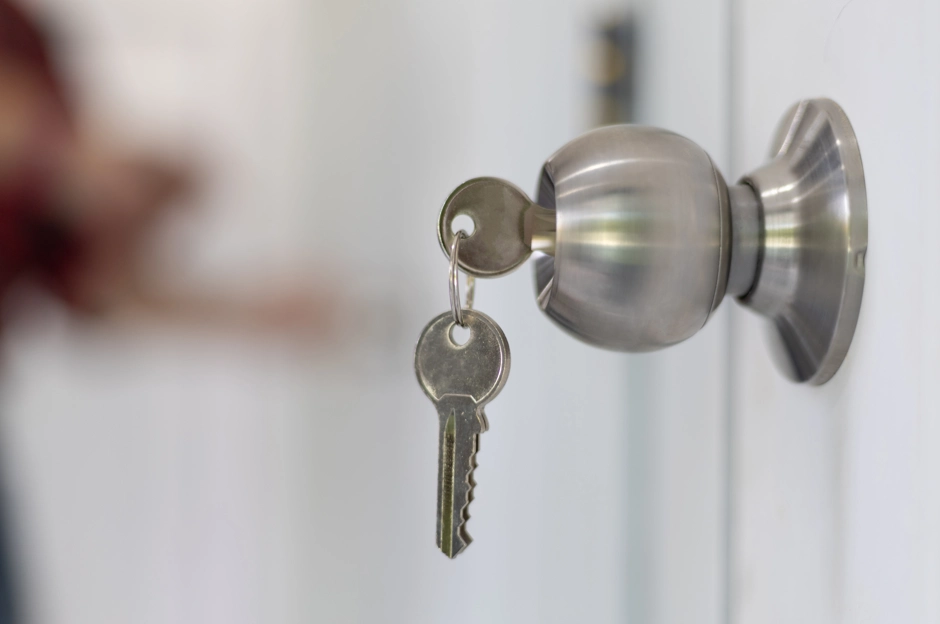
A deadbolt operates differently from a spring latch. When you turn the key or thumb turn, a solid metal bolt extends from the door into the strike plate on the door frame. This bolt does not retract under pressure the way a spring latch does. The only way to move it is to turn the key again from either side.
That resistance to pressure is what makes a deadbolt effective against forced entry. A door secured only by a spring latch can often be opened by applying force to the door face because the angled latch retracts under pressure. A deadbolt does not move unless it is unlocked first.
For NYC apartments where doors open onto shared hallways, building lobbies, or street-level entrances, a deadbolt on every exterior door is the baseline security standard, not an upgrade.
Types of Deadbolts and Which One Fits Your Door
Not all deadbolts are the same. The three main types each suit different situations.
- Single cylinder deadbolts use a key on the exterior and a thumb turn on the interior. This is the most common type in residential buildings across New York City. It works well for most doors where the interior thumb turn does not create a security issue.
- Double cylinder deadbolts require a key on both sides. This is used on doors with glass panels near the lock, where a person could break the glass and reach through to turn a thumb turn. The drawback is that exiting quickly in an emergency requires finding the interior key, which creates a safety concern in some situations.
- Smart deadbolts add electronic access through a PIN pad, phone app, or key fob alongside a physical key override. These work well for households managing multiple people’s access or for short-term rental situations where changing key access frequently is impractical.
ANSI Grades: What the Numbers Mean for Security
The American National Standards Institute grades deadbolts from Grade 1 to Grade 3 based on their resistance to physical attacks, including kick-in force, picking attempts, and drilling.
- Grade 1 – Highest resistance. Tested to withstand significant impact force and 250,000 open and close cycles. Standard for commercial use and recommended for exterior residential doors.
- Grade 2 – Mid-level resistance. Suitable for most residential applications.
- Grade 3 – Minimum residential standard. Offers the least resistance to forced entry.
Most doors in older NYC apartment buildings come with Grade 2 or Grade 3 deadbolts as standard. A Grade 1 upgrade on an exterior door adds meaningful resistance without major cost.
Around 56 percent of burglaries in the US involve forced entry through a door or window. A Grade 1 deadbolt with a reinforced strike plate addresses the most common point of failure in residential door security.
The Strike Plate: The Part Most People Ignore
A deadbolt is only as strong as what it extends into. Most standard strike plates use short screws that only reach the door frame, not the wall stud behind it. A single kick can split that frame and pull the strike plate free, regardless of how strong the deadbolt is.
Replacing the standard strike plate with a reinforced version secured by three-inch screws that reach the stud behind the frame is the single most cost-effective security improvement for any door. This takes about fifteen minutes and costs very little relative to what it adds in resistance to forced entry.
For door frame repair and reinforcement, a professional can assess whether your current frame provides adequate backing for the strike plate or whether additional reinforcement is needed before the deadbolt installation is complete.
What to Check Before Getting a Deadbolt Installed in NYC?
Before choosing a deadbolt, a few checks can save you from buying hardware that does not work with your door.
- Measure the door thickness. Standard US doors are 1-3/4 inches thick, but some NYC apartment doors differ from this.
- Check the backset, which is the distance from the door edge to the centre of the lock hole. Most deadbolts come in 2-3/8 inch or 2-3/4 inch backsets.
- Confirm whether your building management or co-op board has any requirements about lock types or whether landlord notification is needed before installation.
New York State law gives tenants the right to install additional locks on their apartment door, provided they give the landlord a copy of the key. This applies to deadbolts added by the tenant.
Get Your Deadbolt Installed the Right Way With Door Guys NYC
Door Guys NYC handles deadbolt lock installation in NYC for apartments, townhouses, and commercial properties across the city, including Grade 1 upgrades, smart deadbolt setup, and strike plate reinforcement. If your current lock is outdated or you are moving into a new space and want the security sorted from day one, contact us, and we will assess your door and get the right deadbolt installed and working correctly.