A wood door is one of the more permanent decisions you make for a home. It affects security, energy performance, sound insulation, and how the entrance reads from the street or hallway. In New York City, where buildings range from pre-war brownstones to modern condos, the choice involves more variables than just picking a style you like. Choosing the right residential wood door in NYC starts with understanding what the options actually are and how each one performs in a New York environment.
Solid Wood vs Solid Core: What Is the Difference
This is the first decision most homeowners get confused about, and it matters more than the finish or the panel style.
Solid wood doors are cut from a single species of timber or built from stacked timber sections. They look and feel substantial, accept stain and paint well, and last a long time when properly maintained. The drawback is that solid wood moves with humidity and temperature changes. In New York City, where buildings shift between dry, heated interiors in winter and humid summers, a solid wood exterior door can swell, stick, or warp if it is not properly sealed and maintained each year.
Solid core doors use an engineered wood core with a wood veneer on the face. They resist warping better than solid wood because the core does not respond to humidity the same way. For interior applications like bedroom and bathroom doors, solid core is often the practical choice because it also provides better sound insulation than hollow core without the movement issues of solid timber.
For exterior doors in NYC homes, many contractors recommend solid wood with proper sealing or engineered wood products that handle the climate more consistently.
Wood Species: What Performs Best in NYC Conditions
The species you choose affects durability, appearance, and cost. Here are the most common options for residential doors in New York:
- Mahogany – A standard choice for exterior doors in brownstones and townhouses. It has a tight grain that resists moisture penetration and takes paint and stain well. It is also one of the more stable species, meaning it moves less with humidity changes than softer woods.
- White oak – Growing in popularity for both interior and exterior applications. White oak has a closed grain structure that resists moisture better than red oak and works with a range of finishes from natural to painted.
- Douglas fir – A cost-effective option with a straight grain that paints well. Used often used in pre-war buildings during original construction, so it fits the character of older NYC homes.
- Cherry and walnut – Primarily used for interior doors where their colour and grain pattern are the main draw. Both are softer than mahogany or oak and are not typically recommended for exterior use in high-traffic or weather-exposed positions.
Panel Style and Door Construction
Wood doors come in several construction styles that affect both appearance and structural performance.
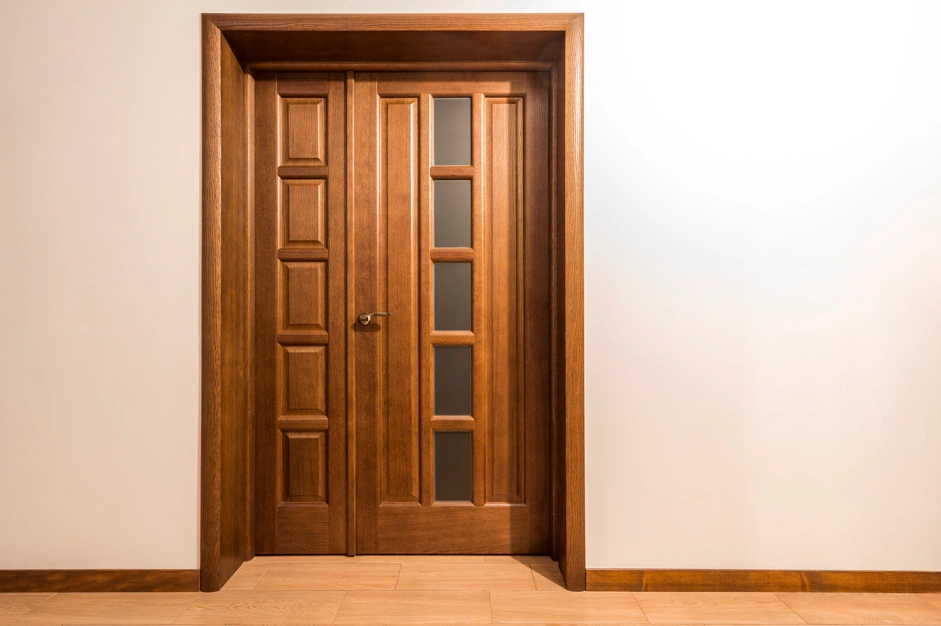
- Stile and rail doors use a frame of vertical stiles and horizontal rails with panels filled in between. This construction allows the wood to move naturally with humidity changes without splitting because the panels float within the frame. Most traditional and period-appropriate doors in NYC brownstones and co-ops use this construction.
- Flush doors have a flat surface on both faces with no raised or recessed panels. These suits modern and contemporary interiors and are common in newer construction across Manhattan and Brooklyn.
For NYC buildings that require fire-rated doors in certain positions, the door must carry a UL fire rating label and meet New York City Building Code requirements. Standard wood doors do not carry fire ratings. If your building or renovation requires a rated door, that needs to be specified before purchase.
What to Check Before Ordering a Wood Door for a NYC Home?
Measuring for a door replacement in New York City is not always straightforward. Older buildings have door openings that are not standard dimensions. A door ordered to standard size may require significant frame adjustment or will not fit at all.
Before ordering, confirm:
- The exact rough opening dimensions, including height, width, and depth of the frame
- Whether the existing frame is square, since settled buildings often have frames that are out of square
- The swing direction and handing of the door
- Whether the door needs to be prehung or whether you are replacing a slab only
Door installation services that measure the opening before sourcing the door prevent the common problem of a door that arrives and does not fit the frame without extensive modification.
Finishing and Maintenance for Wood Doors in NYC
An unfinished wood door exposed to New York weather will deteriorate within one season. Exterior wood doors need a finish that seals the surface against moisture while allowing the wood to breathe slightly. Oil-based paints and exterior-grade penetrating stains are both used depending on the look you want.
Maintenance is not optional for wood exterior doors. A proper door repair and maintenance check each year, covering the finish condition, weatherstripping seal, and hardware function, extends the life of the door significantly and prevents the swelling and sticking that come from moisture getting into unprotected wood.
Get Your Wood Door Selected and Installed With Door Guys NYC
Door Guys NYC handles residential wood doors in NYC selection, supply, and installation for apartments, townhouses, and brownstones across the city. If you are replacing a door or fitting out a new space and want guidance on species, construction, and sizing before you commit to anything, contact us, and we will assess your opening and help you choose a door that fits the space and holds up over time.