Own or manage a commercial property in NYC? Then you have probably noticed those long horizontal bars on the inside of exit doors. Those bars are not decorative additions to make the door look modern. They are panic bars, and NYC building and fire codes require them on most commercial doors. Skipping or removing them is a fast way to fail a Department of Buildings inspection and face fines that climb into the thousands.
The National Fire Protection Association estimates that more than 100,000 commercial structure fires occur in the United States every year, with crowd crushes and blocked exits among the leading causes of preventable injury. Panic hardware was developed after the Triangle Shirtwaist Factory fire of 1911 in NYC, where 146 workers died because doors opened the wrong way and exits were blocked from the inside.
What Is a Panic Bar?
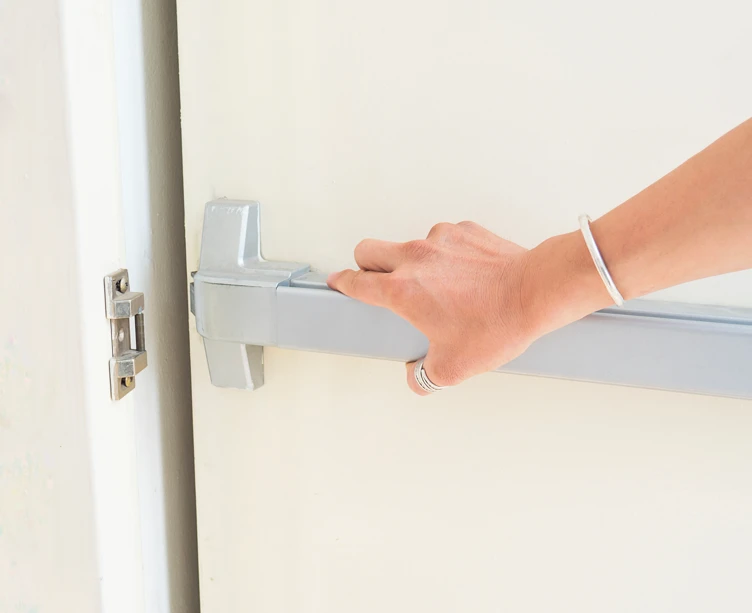
A panic bar, also called an exit device or crash bar, is a horizontal piece of hardware mounted on the inside of an exit door. When pressed in any direction by the body weight of someone leaving the room, the bar instantly retracts the latch, and the door swings open. No key, no knob to turn, no thinking required from the person.
The design solves one critical problem in emergencies. When a fire alarm sounds, and 50 people rush toward the door at once, nobody has time to fumble for a doorknob. The bar gives any person, including children and people who cannot see clearly in smoke, an instant way out of the building.
NYC Codes That Require Panic Bars
Several layers of code mandate panic bars on commercial doors across the five boroughs:
- NYC Building Code Section 1010 requires panic hardware on egress doors in certain occupancy types
- NYC Fire Code Section 1011 governs the maintenance and inspection of exit devices
- NFPA 101 Life Safety Code Section 7.2.1.7 sets the minimum technical standards
- International Building Code Section 1010.1.10 applies to any building with an occupant load of 50 or more
- Americans with Disabilities Act rules require the hardware to be operable with no more than 5 pounds of force
Together, these codes form the legal baseline that every NYC commercial property has to meet. Local Law 26 also adds extra fire safety requirements for high-rise buildings over 100 feet tall.
Which NYC Buildings Need Panic Bars?
Not every commercial door needs panic hardware, but most do. The general rule is that an occupant load of 50 or more triggers the requirement. Specific buildings include:
- Restaurants, bars, clubs, and any food service space
- Theaters, music venues, performance halls, and event spaces
- Schools, daycares, classrooms, and educational facilities
- Healthcare facilities, urgent care offices, and hospitals
- Religious facilities with more than 100 worshippers
- Retail spaces over a set square footage
- Office buildings with multiple tenants
- Warehouses and industrial facilities with worker access
- Hotels and dormitories with assembly areas
If you are renovating a space or changing its use, the requirements often update. A storefront that used to be a small office and is now a 60-seat restaurant suddenly needs new exit hardware on every egress door in the unit.
Common Types of Panic Hardware
NYC building owners can pick from several panic bar styles depending on the door type and code requirement:
Rim Panic Devices
Surface-mounted on the door, latching into the frame. The most common and budget-friendly choice for single commercial doors.
Mortise Panic Devices
Built into the edge of the door for a cleaner look. Common on higher-end commercial entries and office suites.
Vertical Rod Devices
Use rods that extend to the top and bottom of the door frame. Required for double doors with no center mullion between them.
Fire-Rated Panic Bars
Tested and certified to keep working through high heat. Required on any door that is part of a fire-rated wall assembly. Pairing them with fire rated doors is mandatory for stairwells and corridors in NYC commercial buildings.
Concealed Vertical Rods
Hidden inside the door panel for a sleek look. Common in modern office lobbies and high-end retail storefronts.
What Happens If You Skip the Panic Bars?
Skipping the requirement can hurt your business in several ways:
- DOB violations start at 500 dollars per door, climbing to 5,000 dollars or more for repeat offenses
- Failed FDNY inspections that block your certificate of occupancy
- Insurance policy denials if a fire or injury occurs
- Personal liability lawsuits from injured tenants, customers, or employees
- Forced building closure until the hardware is brought up to code
- Loss of business license in extreme cases
A bar costs a few hundred dollars to install. A lawsuit from a single injury can cost millions. The math comes out clearly in favor of installing the hardware before any inspector shows up.
How to Tell If Your Panic Hardware Is Compliant?
A trustworthy commercial door repair team can inspect your existing panic bars and confirm whether they meet current code. Look for these signs that your hardware is due for service or replacement:
- The latch sticks or fails to retract when pushed
- The bar feels loose, wobbles, or makes grinding noises
- Stickers from the original manufacturer are missing or faded
- The hardware was installed more than 10 years ago without updates
- The push force exceeds 15 pounds, far above the ADA limit of 5
- No annual inspection record is on file
Annual professional inspection is required by NYC code for exit hardware on all occupied commercial buildings, not just at the change of tenant.
Get Your Doors Inspected Before the Inspector Does
Every day, a panic bar sits broken or missing on a commercial exit, your building is one inspection away from a violation. The DOB issues thousands of egress violations every year across NYC, and the average fine has climbed steadily over the past decade. Fixing the issue today costs a fraction of what one citation, one failed inspection, or one accident lawsuit would cost the business tomorrow.
About Door Guys NYC
Door Guys NYC is a commercial and residential door installation and repair company based in Manhattan, serving all five boroughs of New York City with over a decade of door industry experience. Our team handles panic bar installation, fire-rated door work, aluminum and glass storefront repairs, commercial entry doors, and emergency hardware service under one roof. Call us for a free quote on your next door project today.